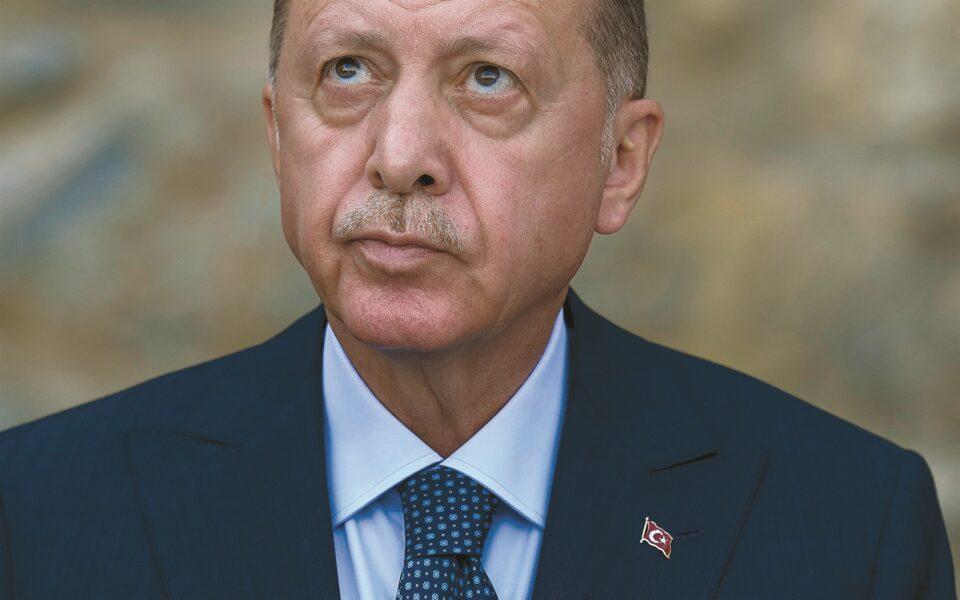
The disputes with Greece will be useful ammunition for Turkish President Recep Tayyip Erdogan should he decide to manufacture a crisis that would divert attention away from his country’s economic disintegration. He is, after all, quite capable of burning his bridges with the West if it wins him the election, which has become a serious matter of survival for the Turkish strongman. The fact, however, is that no one knows exactly what he’s thinking and planning.
There are 10 analysts, journalists and experts with excellent knowledge of the situation in Turkey, who told where they see the country and its leader a year from now, after voters go to the polls in June 2023. One thing they all seem to agree on is that the Turkish president is trapped in a tricky situation, is unpredictable and is ready to pull out all the stops to make sure he stays in power.
Steven A. Cook, Council on Foreign Relations, Middle East and North Africa specialist.

I think that Erdogan will do everything in his power to win the election, including using Greece and Cyprus to turn public sentiment against them. If, however, Erdogan ends up winning, it is likely that we’ll see him backing down from his aggressive posturing.
It’s hard to predict what will happen if the opposition wins. If [social democratic CHP head] Kilicdaroglu wins, he may adopt a more moderate stance on the Aegean only if he wants to stand apart from his predecessor, because it is a hot-button issue for a large section of Turks, regardless of who they vote for. The present-day opposition would perhaps take a less aggressive stance towards the European Union and the West, but Kilicdaroglu is a nationalist. Ankara Mayor Mansur Yavas is another candidate that would make sense to take on Erdogan, as he is both remarkably popular and a nationalist, which could again be a problem for Greece and Cyprus.
I don’t think the Turks want to go to war with Greece deliberately, especially given the terrible state of the economy. But anything can happen. Erdogan’s rhetoric concerning the Lausanne Treaty, the islands and the notion that Turkey is being treated unfairly may, after all, take him down a roadthat he may never have really wanted to take.
As for the Turkish economy, it is in dire straits indeed, because of Erdogan’s poor management. We have seen money being channeled into the Turkish central bank and I suspect that Russia is behind it, especially given the Putin-Erdogan deal for helping Russia circumvent sanctions. It has become increasingly clear that Putin is investing in Erdogan and wants him to win this election. Don’t forget that Russia has a lot of money right now because of the explosion of energy prices. I suspect that the foreign exchange flowing into Turkey comes from money made by Russian energy sales to the West.
Yavuz Baydar, Editor in Chief of the independent Ahval news website, Journalist, blogger and activist.
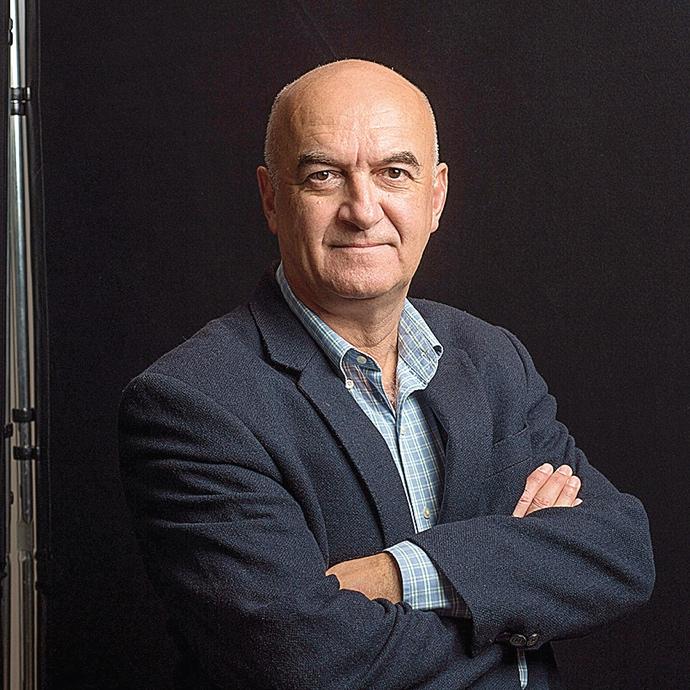
As I predicted in an analysis two years ago – following the conversion of Hagia Sophia into a mosque as an act full of symbolism – Erdogan’s drive to transform Turkey into a full-fledged autocracy will have to be linked to his efforts to question the Lausanne Treaty.
Erdogan’s strategy to stay in power is based on oppression at home and offensive foreign policy. The Western appeasement would never work, and it did not. Erdogan thrives on a fragmented and confused opposition on all flanks and the Western illusions of soft power.
His vision is also articulated in his increasing confrontation with the USA and NATO, in which Greece as well as Syria, Sweden and Finland are only means. Erdogan will remain a great gambler, as he tries to open doors to Russia and the East. Under his rule, we may see Turkey gliding into that sphere, albeit in a slow-motion manner.
Another key question, therefore, is whether or not Russia, Saudi Arabia and the Gulf, but equally important, the UK will prefer to have him stay in power.
Polarization and fear loom over the country. The opposition so far lacks a coherent program to tackle the massive issues and they have lost contact with the European parties, the EU circles and the American administration. This raises concerns that the actors in power may change, but not the course of the country.
Zehra Celenk, author and columnist at Gazete Duvar, human rights expert.

Should Erdogan win again, it will be very hard to think of a bright future in terms of fundamental human rights and women’s rights in Turkey. Things have been worse for women ever since Turkey pulled out of the Council of Europe Convention on preventing and combating violence against women and domestic violence – also known as the Istanbul Convention – with a Presidential Order on March 20, 2021.
In that regard, I believe a more democratic, egalitarian CHP led by Kemal Kilicdaroglu with full support from smaller opposition parties on the “Table of Six” as well as the HDP, in line with international legal inclinations about women’s rights and LQBTIQ+ issues, might provide a rather optimistic outlook for the future.
Mehmet Caman, Memorial University of Newfoundland, Canada. Expert on Turkey and human rights.

One year from now, Turkey will not be a very different country than it is today.
One of Turkey’s main problems is the formation of a state that imposes a Turkish supremacist, ethnic-racist identity on its citizens. The foundations of this state are based on Ottoman imperialism and the racist and expansionist policies of the Union and Progress Party.
Turkey should be a decentralized, federal, democratic and secular republic emphasizing its Anatolian identity, that is, referring to geographical identity.
I do not see realistically the possibility that Turkey in the next year will bring with it a political power that will open the door to the changes I mentioned.
Ryan Gingeras, Naval Postgraduate School, Historian of the late Ottoman Empire.

One may be confident about two major factors that will shape Turkish-Greek relations in 2023. By the summer, it is likely that citizens in both countries will have voted in critical elections.
Economic uncertainty, to varying degrees, looms over both countries. Immigration stirs discontent among the majority of Turks and Greeks. Larger numbers of voters will see the election as an opportunity to hold their leaders accountable for misuses of their power. And of course, electoral campaigns in both countries will foreground the threat and possibility of a new Greco-Turkish war.
A second factor to consider for the coming year is the weight of history. In 2023 the Turkish government will undoubtedly take great pains to mark two important centennials. The coming summer will mark the hundredth anniversary of the signing of the Treaty of Lausanne. While Greeks are likely to look upon this moment as the culmination of the catastrophe in Asia Minor (as well as the beginning of the population exchanges of 1923-24), Turks are also likely to see Lausanne’s centennial as an opportunity to relitigate the treaty itself.
Regardless of the outcome of the presidential elections, Turkish political leaders are united in their desire to press forward with the country’s claims in the Aegean and Mediterranean.m Nevertheless, the weight of history will undoubtedly factor into just what lengths Erdogan, or his successor, are willing to go to attain victory at the expense of Greece.
Seyfettin Gursel, Bahcesehir University, expert on the Turkish economy.
I believe that even if Erdogan can again become president he has no choice other than to maintain Turkey in the Western Alliance no matter the cost. From the economic point of view, Turkey cannot leave the Customs Union, NATO and the European Council.
If Erdogan wins the presidential elections the crisis is not reversible. I do not want to speculate on this issue. I can just say that the nightmare will become more frightening. If the candidate of the opposition becomes president this will not be easy for the new government to reverse the crisis because the problems that have accumulated in the last few years, like very high inflation, negative central bank reserves etc, very high current account deficits, are so burning that it is difficult to fix them rapidly and at relatively modest costs.
Levent Koker, lawyer, expert on Turkish law.
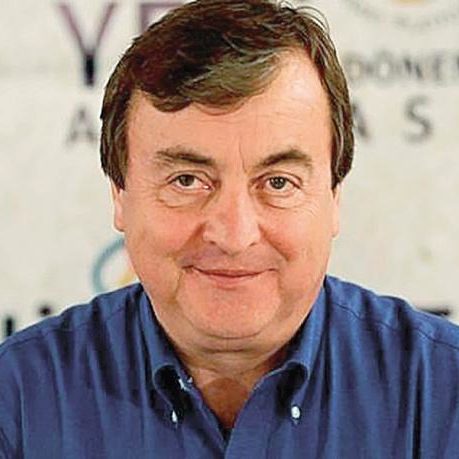
If the MI wins the elections, it will be better than the continuation of the already 20-year old Erdogan era.
This is my biggest concern – if the attitude to exclude the LFA and HDP is sustained and the inability to resolve the Kurdish Issue in a democratically reconstituted polity, Turkey will not be able to break the chains of authoritarianism.
Is there solid ground for optimism? The Republic of Turkey has been a state based historically on the ideology of Turkish nationalism. Any solution to identity-based issues in Turkish politics requires the eradication of this state ideology and this requires almost a revolutionary change in the constitution.
The upcoming elections may help Turkish society realize that the fundamental issue is to overcome the impasse formed by Turkish-Islamic nationalism on the one hand and secular Turkish nationalism on the other. Hence, a year from now, I think, Turkey at best will be debating whether and how to make a new constitution.
Gokhan Bacik, Palacky University, Czech Republic, expert on Islam and Turkey.
The Turkish economy is in a very poor state and Erdogan will, reasonably, lose the election. You cannot know how an authoritarian leader will react, but we do know that the more the economy worsens, the more he’ll use other issues to draw votes. It is possible, for example, that he’ll cause crises in foreign policy.
This is much more likely in the case of Greece than, say, in the case of Syria. Turkish citizens “bite” when it comes to matters of security and Erdogan wants people talking about anything but the economy. A crisis with Greece would be big enough to counteract the economic crisis.
I believe that if Erdogan chooses to play this game, the Greece front is likely. And I also believe that Erdogan is even prepared to sacrifice relations with the West just to win this election. He’s willing to risk everything.
If the opposition wins, things will only be marginally better in terms of Greece. Turkey’s foreign policy towards Greece is something Turkish society agrees with.
Cengiz Aktar, political scientist and columnist, expert in Turkish-European relations.
Today there is a vast consensus among the pollsters and Turkey watchers that the present regime will lose the elections and the ruling coalition and Erdogan will be defeated.
In my opinion the evils Turkey is going through on a daily basis won’t cease, once a new administration is enacted. The heteroclite opposition has no political program to redress the chaotic situation other than to defeat Erdogan! It has no economic program, no political will to solve the Kurdish quagmire, no plan to reverse the ongoing foreign adventures, including threats against Cyprus and Greece.
On this very issue, with the exception of the HDP, the opposition is actually as much of a warmonger as the regime.
All in all, one should not expect Turkey to recover and return to normalcy, even with a win by the opposition.
Jenny White, Stockholm University, Institute for Turkish Studies, expert in political Islam and Turkey.

These days Erdogan is losing popularity. The new generations know nothing of the previous neglect and see only the pressure from above to be loyal to the AKP or else, to be Muslim in one way only. The youth only remember the AKP’s oppression. They are tired of the government using Islam to support its policies and actions, which people can see very clearly are corrupt and enriching only the people close to Erdogan. Young people cannot find jobs unless they are in the AKP circles.
The burning question is whether Erdogan will leave power if he loses the next presidential and parliamentary elections scheduled for June 2023 or if he will try to fix the election, as he has before. A civil war is not beyond imagining. Erdogan commented once that he believes the “real” Turkey consists of 50 million people and the other 30 million are the “enemy within”.
Current polls show that Erdogan will likely lose the vote for the presidency, but his AKP party will still dominate parliament. The opposition likely will be blocked from implementing any plans for reform. People are afraid that if Erdogan goes, someone will do to them what was done under his watch. Even if he wins the 2023 election, Erdogan will not be able to keep power without further repression.
The main opposition CHP is slightly more moderate, but also nationalist, and nationalist positions are always guaranteed to please the populace and draw their attention away from a failing economy. So it’s unlikely that there will be any major changes in foreign policy or lessening of internal polarization.
Will there even be an election? If the AKP government finds itself in a hot conflict, say with Greece and its ally, France, in the Aegean, or with Russia and/or the US in Syria, this might be grounds for canceling the election and declaring a state of emergency.


